
Why Simple Recipes Keep Food Creators Growing
For food content creators, the most impressive recipe is not always the one that builds the strongest audience. Elaborate dishes can demonstrate technical skill and attract viewers who enjoy a culinary challenge, but simple, useful recipes are often the posts people save, share, revisit and eventually make part of their routine.
That repeat behavior matters. A creator who helps someone get dinner on the table, pack a child’s lunch or prepare several weekday meals is doing more than collecting views. They are becoming part of that person’s everyday life—and that kind of trust can lead to stronger engagement, brand partnerships and cookbook sales.
Easy Recipes Build Repeat Viewers
Many people discover food creators because they want inspiration, but they return because the content is practical. A beginner may not be ready to make laminated pastries, handmade pasta or a seven-course dinner. They may, however, try a 20-minute pasta dish, a three-ingredient snack or a meal that uses ingredients already sitting in the pantry.
This is especially important for new cooks, who are often looking for recipes that answer immediate questions:
- What can I make after work?
- How do I feed my family without spending hours in the kitchen?
- What can I prepare with a limited budget?
- Can I make this without special equipment?
- Will the recipe work the first time?
Budget Bytes is a strong example of a food brand built around this kind of accessibility. Its quick weeknight-dinner collection features practical meals such as pasta, orzo and one-pot dishes, giving busy cooks a clear place to turn when they need an affordable dinner idea.budgetbytes
The goal is not to make every recipe basic or predictable. It is to create a reliable foundation of recipes people can realistically cook. A creator might build this foundation with:
- One-pan dinners.
- Five-ingredient lunches.
- Quick breakfasts.
- Simple sauces and dressings.
- Budget-friendly family meals.
- No-cook snacks.
- Freezer-friendly dishes.
- Recipes that use leftovers creatively.
These are the recipes that can become part of a viewer’s weekly rotation. They may not always create the most dramatic first impression, but they can generate saves, comments such as “I made this tonight,” repeat visits and recommendations to friends.
Tiny Grandma’s Comforting Appeal
Tiny Grandma offers a particularly interesting example because the account shows that food content does not have to be a conventional recipe tutorial to create a strong audience connection.
The stop-motion Korean matriarch character, created by UnPOP, combines miniature food preparation, family recipes, humor, cultural details, and a recurring cast of characters, including Tiny Grandma’s cat, Sunny IV. The videos are highly stylized, but the food is familiar and comforting. Dishes such as sushi, vegetables and home-cooked meals become part of a warm, recognizable world.
Tiny Grandma’s appeal comes from repetition and personality. Viewers return not only to see what she is making, but also to spend time with a character they recognize. That is an important lesson for food creators: people may arrive for a recipe, but they often stay for the feeling surrounding it.
The account also demonstrates the value of transparency. In response to questions about how the videos are made, the creators explained that they use real food and family recipes and interact with the community through requests and replies. By showing the process behind the polished videos, Tiny Grandma gives the audience another reason to feel connected.
A creator does not need stop-motion animation or a fictional grandmother to apply the same idea. A recognizable voice, recurring series, family tradition, visual style or personal ritual can make simple food content feel distinctive.
Back-to-School Bento Content
Back-to-school season is an ideal opportunity for creators to make simple food content feel timely and useful. Bento boxes offer visual appeal without requiring complicated cooking. Their compartments make it easy to show variety, color, and portion ideas in a format that works well for TikTok, Instagram Reels, Pinterest, and YouTube Shorts.
Recent YouTube trend reporting highlighted the popularity of bento-box meal-prep videos, with bento content receiving more than 250 million views on the platform during the year covered. The appeal comes partly from the preparation process itself: viewers enjoy watching ingredients being organized into attractive, practical lunches.
A strong bento video does not need an elaborate recipe. It might show a creator assembling:
- Turkey, cheese, cucumber and hummus.
- Crackers, grapes, boiled eggs and sliced vegetables.
- Mini pita pizzas with fruit.
- Chickpea salad with carrots and pretzels.
- Rice, edamame, chicken and a simple dipping sauce.
- Leftover pasta with berries and a small sweet treat.
The most useful bento content can teach viewers how to think about lunch rather than simply presenting one finished box. A creator could explain how to combine a protein, carbohydrate, fruit or vegetable and a dip or snack. Bento guides often organize lunches around these basic components while emphasizing that many items can be prepared ahead
That format creates endless content possibilities. A creator can make a series for picky eaters, vegetarian lunches, high-protein lunches, budget lunches or lunches that require no reheating. Each video remains simple, but the series encourages viewers to return for the next combination.
Meal Prep Makes Content Practical
Meal prep is another area where simple recipes can become highly repeatable content. Viewers are not always searching for one spectacular dish; many are looking for a system that will make the week easier.
Pinch of Yum offers a useful example. Its meal-prep collection includes breakfast sandwiches, salads, bowls, soups and other dishes designed to make busy weeks more manageable. Project Meal Plan similarly focuses on make-ahead lunches, including cold meals that can be prepared in advance for work or school.
A meal-prep video might demonstrate how to prepare one grain, one protein, two vegetables, and a sauce, then combine them in different ways throughout the week. This approach is more flexible than presenting five unrelated meals and shows viewers how a small amount of preparation can create variety.
Food creators can turn that concept into recurring features such as:
- “Prep five lunches with me.”
- “One grocery haul, three dinners.”
- “Sunday prep for beginners.”
- “Five meals from one roast chicken.”
- “Freezer-friendly breakfasts.”
- “Three sauces that change the same grain bowl.”
- “What I pack for work all week.”
Meal-prep content solves a problem beyond cooking. It helps viewers plan, shop, organize, and save time. A creator who consistently makes those tasks feel manageable can become a trusted resource rather than just another account in someone’s feed.
Balance Skill With Accessibility
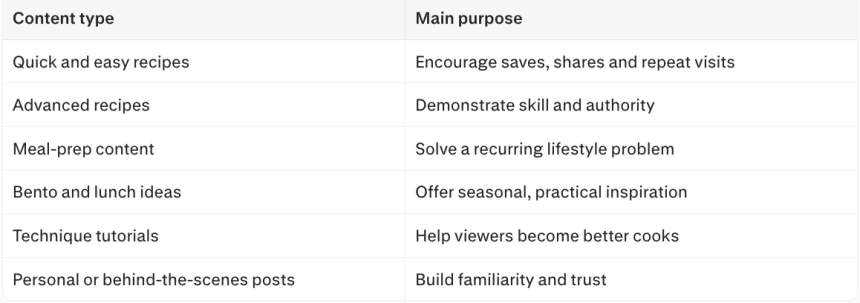
Experienced food creators should not abandon complicated recipes. Technical dishes can establish authority, showcase creativity and appeal to viewers who want to improve their skills. A difficult recipe may also attract attention because it is visually dramatic or teaches an impressive technique.
Binging with Babish offers a useful example of this balance. The channel is known for recreating foods from film and television while teaching cooking techniques. Some recipes are ambitious, but the process is usually broken into understandable steps, allowing viewers with different skill levels to follow along.
A creator might post a challenging croissant tutorial on Monday, a simple breakfast sandwich on Wednesday and a five-ingredient dinner on Friday. The advanced recipe demonstrates expertise; the easier recipes give the wider audience a reason to return.
RecipeTin Eats provides another example of an approachable food brand that focuses on familiar meals, clear instructions, and strong flavor. The lesson is that easy does not have to mean bland or boring. Creators can keep recipes accessible while using sauces, spices, garnishes, and simple techniques to make the final dish feel special.
This balance can be organized into clear content categories:
Feel Good Foodie also demonstrates how a creator can combine approachable recipes with a broader lifestyle perspective. Quick breakfasts, meal-prep ideas, healthy snacks and simple lunches give viewers reasons to return throughout the day, while seasonal content keeps the account relevant.
Engagement Becomes a Relationship
A recipe that viewers make repeatedly can create a deeper form of engagement than a recipe that is merely watched once. People may comment with substitutions, tag friends, share photographs or return months later to ask a question. Those interactions give creators insight into what their audience genuinely needs.
Simple recipes also invite conversation. Viewers can easily respond:
- “Can I use chickpeas instead of chicken?”
- “Will this work in a lunchbox?”
- “Can I freeze it?”
- “What can I substitute for dairy?”
- “How would you make this vegetarian?”
- “Can you make a version for one person?”
Creators should treat those questions as ideas for future posts. A comment about freezing could become a storage tutorial. A substitution question could become an ingredient-swap series. A request for lunch ideas could lead to a month of back-to-school bentos.
This is how a creator moves from broadcasting recipes to building a community. The audience is not simply consuming content; it is helping shape what comes next.
From Trust to Sponsorships and Cookbooks
Practical content can also strengthen a creator’s business. Brands are often interested in more than follower counts. They want to know whether an audience pays attention, trusts the creator, and takes action. Industry guidance for food creators emphasizes that engagement, audience alignment, and performance data can matter significantly when creators pursue partnerships.j
Simple recipes create natural opportunities for relevant sponsorships. A creator might feature:
- A nonstick pan in a one-pan dinner.
- A lunchbox brand in a back-to-school bento.
- Storage containers in a meal-prep video.
- A grocery or pantry brand in a budget recipe.
- A blender in a quick sauce or smoothie.
- A spice company in a weeknight meal.
The partnership works best when the product genuinely belongs in the recipe. Audiences are more likely to respond positively when a sponsored ingredient or kitchen tool solves the same problem the creator usually addresses.
The same principle applies to cookbook sales. A cookbook filled only with spectacular weekend projects may appeal to devoted cooks, but a book containing weeknight dinners, lunchbox ideas, freezer meals and reliable staples can become a regular household reference. Digital guides, meal plans and e-cookbooks offer similar opportunities for food creators to build income beyond individual posts.
A viewer who has successfully made ten recipes from a creator is much more likely to consider buying that creator’s cookbook than someone who has only watched one entertaining video.
The Most Valuable Recipe Is Useful
The examples of Tiny Grandma, Budget Bytes, Pinch of Yum, RecipeTin Eats, Feel Good Foodie and Binging with Babish show that there is no single formula for successful food content. Some creators build loyalty through affordability, some through meal planning, some through technical skill and others through character, humor or visual storytelling.
The most effective approach is to let each type of content serve a different purpose. Complicated recipes can show what the creator knows. Simple recipes can show that the creator understands the audience’s real life. Bento videos can offer timely inspiration. Meal-prep content can provide structure. Personal posts can make the relationship feel human.
The recipes viewers return to again and again are often the ones that fit into ordinary routines: the lunch packed before school, the dinner made after work, the breakfast prepared on Sunday or the sauce remembered when the refrigerator looks empty.
For creators, that is the larger lesson. A viral recipe may introduce someone to an account, but a dependable recipe gives them a reason to come back. Over time, usefulness becomes familiarity, familiarity becomes trust and trust creates the foundation for lasting engagement, brand partnerships and cookbook purchases.
About the Author
Nikki Lopez is a seasoned professional with over a decade of experience in the startup world, specializing in leveraging creative content and community building to empower content creators. Known for a strategic approach and a deep understanding of audience needs, Nikki has a proven track record of leading the development of engaging content strategies and guiding the growth of thriving communities. Her leadership focuses on fostering meaningful interactions and impactful journeys for both creators and their audiences.