
Fourth Wing Fans - We Need to Talk About Boundaries
Rebecca Yarros is grieving her father. Meanwhile, parts of the fandom are treating canceled appearances and casting choices like personal betrayals.
Three months ago, I wrote an article called “Dear Fourth Wing Fans, Please Let Rebecca Yarros Cook.”
The premise was simple: getting attached to a fan cast was setting people up to hate whoever actually got the roles.
Well. Here we are.
The casting news arrived, and parts of the internet responded as though someone had personally broken into their home and shredded their annotated copy of Fourth Wing.
I would enjoy my “I told you so” moment more if the surrounding circumstances weren’t so upsetting. Because while readers have been arguing over who should play their fictional boyfriend, Rebecca Yarros has been grieving her father.
Somewhere in all this enthusiasm for the world she created, we seem to have misplaced our concern for the person who created it.
A canceled event is disappointing. Grief is devastating.
Earlier this month, Yarros’s Los Angeles event was canceled and her Seattle appearance was postponed. She subsequently shared that her father had died. An October 20 update explained that her team was working to reschedule both events.
That sequence matters. Readers did not initially know what had happened.
But the absence of a public explanation should leave room for compassion. People should not have to announce a family tragedy before strangers consider giving them some grace.
I understand being disappointed. People arrange childcare and spend money on travel. An event can represent months of anticipation, and practical questions about refunds deserve answers.
Those questions can go to the organizers. They do not require putting a grieving author on trial.
The backlash being discussed within the fandom raises an uncomfortable question: how much access do readers believe buying a book entitles them to?
Because there is a considerable distance between “I’m sad this event isn’t happening” and behaving as though an author has failed a personal obligation to you.
Her father died.
That sentence should be enough to interrupt the conversation about what everyone else wanted from her.
The hermit author has left the chat
The image of an author quietly writing books and occasionally emerging for publication day feels increasingly difficult to sustain.
Authors are encouraged to build platforms and remain accessible. Readers get glimpses of their daily lives alongside updates about their work. That connection can be lovely, especially when a story has meant something deeply personal to you.
It can also create a misleading sense of familiarity.
You recognize their kitchen. You know their dog’s name. Their videos turn up between posts from your actual friends.
Eventually, it can start to feel as though you know them.
A parasocial relationship is a one-sided connection with someone you encounter through media. The feeling of connection can be real even when the relationship is not reciprocal.
The trouble starts when familiarity becomes entitlement.
An author thanking readers for their support is not agreeing to be permanently available. Sharing something personal does not give an audience authority over the rest of that person’s life.
And being grateful for a career does not mean forfeiting the right to step away from it.
Then came the casting announcement
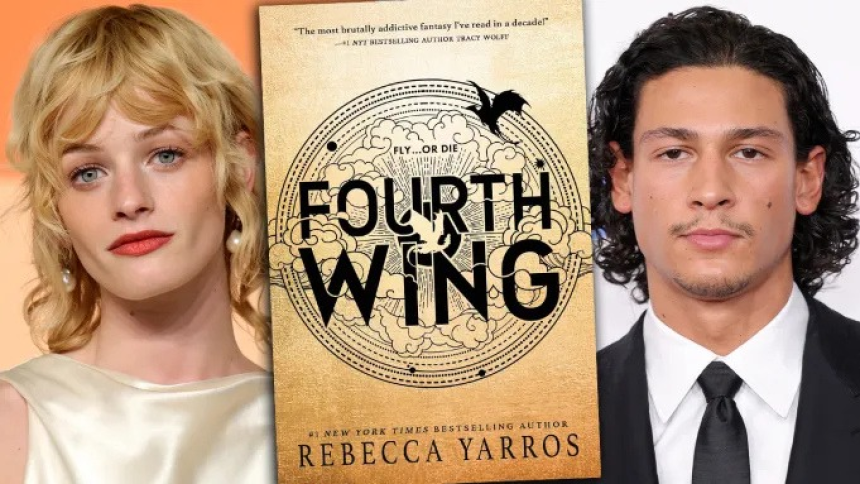
Against that backdrop, reports emerged that Esther McGregor would play Violet Sorrengail and Emilio Sakraya would play Xaden Riorson in Prime Video’s adaptation. Prime Video has now officially confirmed the leads.
Cue the collective spiral.
To be fair, I do not think the photographs accompanying Deadline’s initial report helped people envision these actors in the roles. The portraits in the official announcement are, to my eye, far more effective.
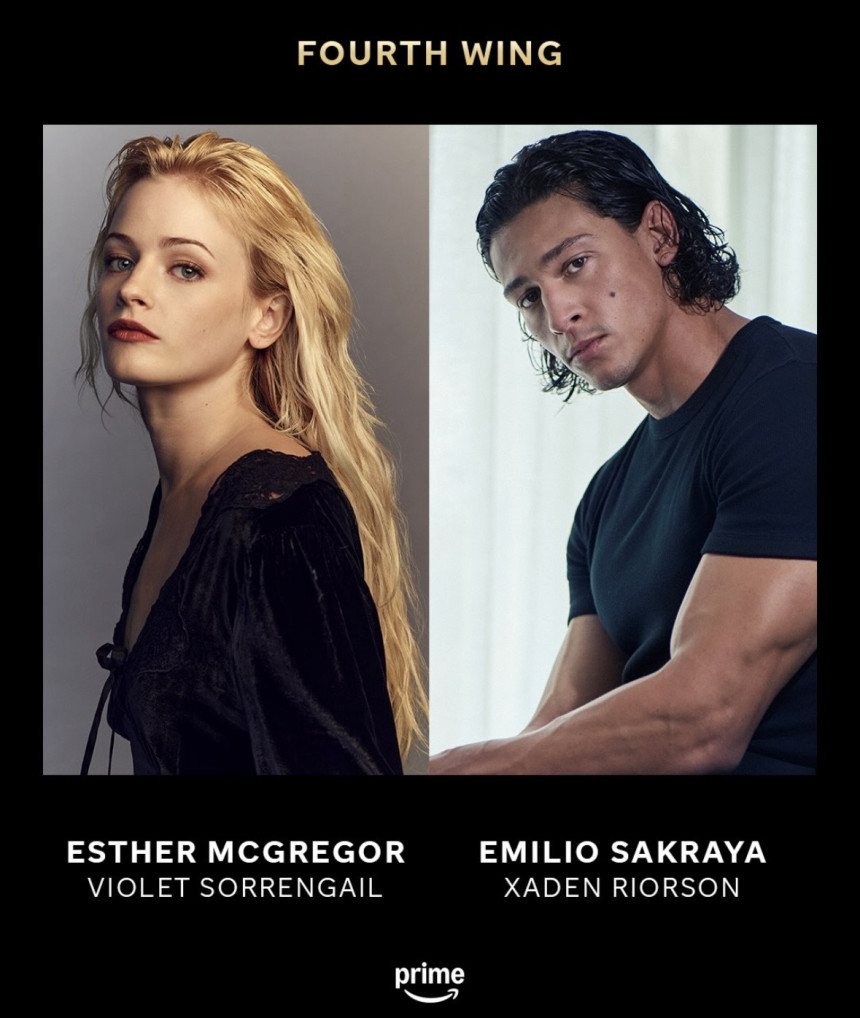
The image shared with that announcement makes it considerably easier for me to see the possibility.
But that difference also demonstrates how flimsy a headshot-based verdict really is.
Same actors. Different photographs. A noticeably different first impression.
If your confidence in someone’s ability to play Xaden rises or falls with a change of picture, perhaps we should wait until we see him act.
A publicity photograph cannot show us the chemistry between the leads. It gives us no meaningful sense of how an actor will inhabit a character over an entire scene.
We are making sweeping judgments about a television performance using material that is not a television performance.
Using TikTok to make a point
As a Fourth Wing fan myself, I took to TikTok to make my point, and hopefully serve as a useful reminder for anyone struggling to picture the casting.
In the video I use Emma D’Arcy and Viggo Mortensen, whose everyday appearances look quite different from their fantasy roles, as examples.
The visual argument is straightforward: an actor’s appearance outside a production does not tell you everything about the character they can become.
Which seems obvious until a casting announcement apparently causes everyone to forget that costume departments exist.
Nobody needs Viggo Mortensen to look like he has spent the afternoon roaming Middle-earth every time he leaves the house.
The transformation is part of the work.
These comparisons do not prove that Fourth Wing will be a brilliant adaptation. They do demonstrate why judging its leads from unrelated photographs is premature.
I already wrote this article. Apparently, we needed a sequel.
In my earlier piece, I argued that fan casting becomes a problem when people start treating their preferences as promises.
Making an edit of your dream Xaden is fun. Becoming convinced that anyone else’s casting represents a betrayal is where the fun starts getting uncomfortable.
Readers have spent years constructing their own versions of these characters. Of course a real person is going to look different.
Even readers who agree on every detail in the text can imagine different faces.
There was never going to be a casting announcement that satisfied everyone. That was predictable three months ago, and the reaction now is precisely why I wanted to have this conversation then.
I am also increasingly uncomfortable with the way actors become targets because they have accepted a job someone else imagined differently.
You can question a casting decision without picking apart a person’s face for public entertainment.
Criticism is allowed. Ownership is the problem.
None of this requires readers to love the casting.
There is room for serious discussion about representation and whether an adaptation preserves what matters in the source material. Readers can have concerns, and an author’s involvement does not guarantee that every creative decision will work.
I’m looking at you, Ginny Weasley.
When there is a performance to discuss, we can discuss the performance.
What concerns me is how quickly disappointment becomes personal.
The casting does not match what someone imagined, so the author must explain herself. An appearance is canceled, so strangers demand to know whether her reason is sufficient.
In both cases, the creator’s humanity disappears behind the audience’s expectations.
That is a miserable bargain to ask anyone to accept in exchange for success.
Let Rebecca be a person
Authors are real people. Not robots programmed to crank out books for our entertainment on a biannual basis.
I want this adaptation to be good. I love being excited about a story, and I understand how fiercely readers can care about the worlds that give them somewhere to escape.
But loving a fictional world should not make us indifferent to the real people working on it.
Yarros can care about her readers and still need privacy. She can be excited about the adaptation while grieving. None of us gets to set the timetable for how she navigates that.
Three months ago, I asked everyone to let Rebecca Yarros cook.
I still stand by that.
Right now, though, I would settle for letting her grieve without turning every professional update into another thing she has to defend.
About the Author
Ashley is a military wife and mother who can often be found listening to an audiobook while driving the mom taxi, desperate to cling to sanity through the joy of escapism. Her love of reading inspired her return to school, and she is currently finishing her bachelor’s degree in creative writing at Southern New Hampshire University. Being a mother does not mean you have to give up your dreams, and her story is still being written.