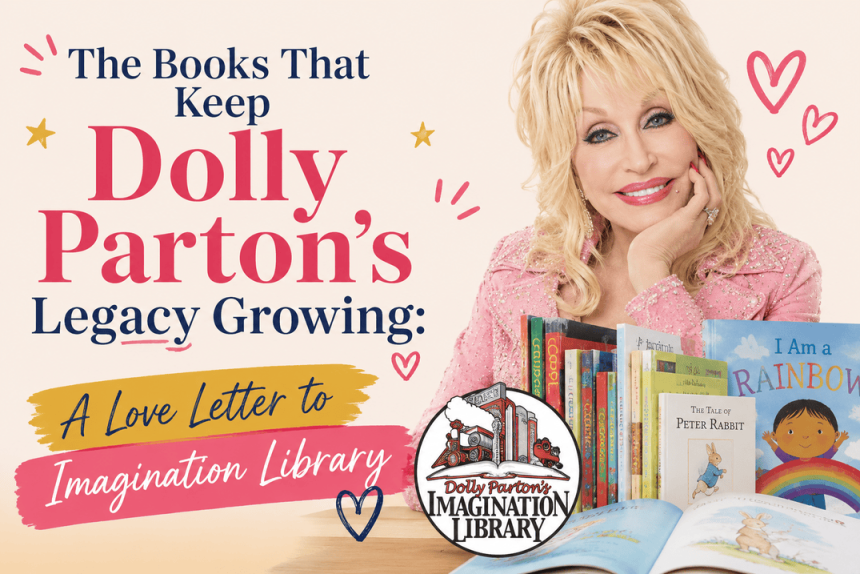

The Books That Keep Dolly Parton’s Legacy Growing: A Love Letter to Imagination Library
If you miss Dolly Parton, one meaningful way to honor her is to support the children’s-literacy mission she made central to her public life. Dolly Parton’s Imagination Library is not simply a celebrity charity or a sweet footnote to an extraordinary career; it is a living promise that every child deserves the chance to hold a book, hear a story, and imagine a future larger than the one they can currently see.
Dolly Parton’s music, humor, generosity, and unmistakable voice made her one of the most beloved creators of her generation. But her commitment to children’s reading may be among the most enduring parts of her legacy. Through Imagination Library, she helped transform the simple act of receiving a book into an experience of being seen, encouraged, and invited to dream.
What Imagination Library Does
Founded in 1995, Dolly Parton’s Imagination Library provides enrolled children with free, age-appropriate books from birth until they begin school. The program operates through local and regional partners, meaning availability depends on whether a participating partner serves a family’s community. Where a program exists, children receive a new book in the mail each month, addressed directly to them.
That direct-to-home approach is part of what makes the program so moving. A library book is invaluable, but a book that arrives with a child’s name on the envelope can feel like a gift meant especially for them. It creates anticipation. It gives children something to look forward to. And, over time, it helps build a small home library filled with stories, characters, colors, questions, and memories.
In the United States, children traditionally begin their Imagination Library journey with The Little Engine That Could and receive Look Out Kindergarten, Here I Come! as they approach the end of the program. The book selections are chosen with children’s changing developmental stages in mind, and the program includes bilingual English/Spanish titles as part of its U.S. offerings.
Wonderful Books Through the Years
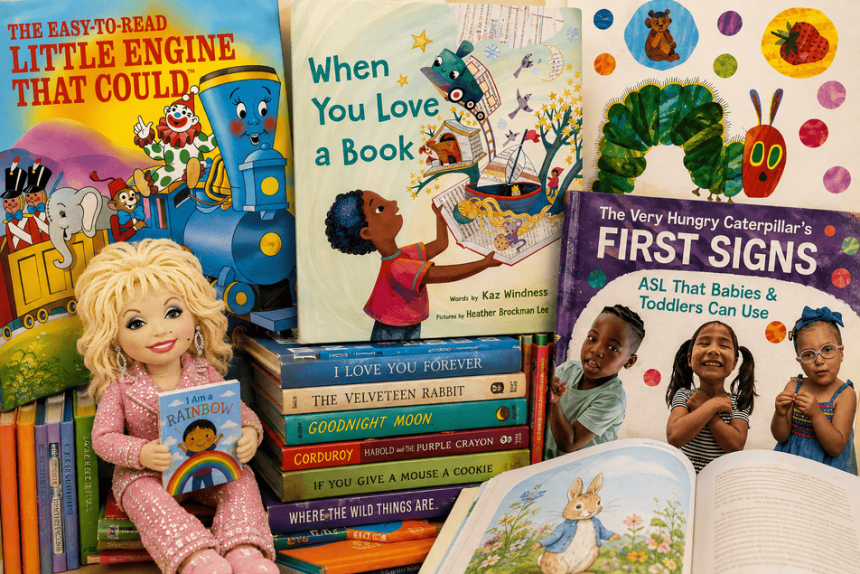
Over the years, children enrolled in Dolly Parton’s Imagination Library have received a remarkable mix of classics, contemporary picture books, bedtime favorites, bilingual titles, and stories that encourage kindness, confidence, curiosity, and creativity. The selections change over time and can vary by regional program, but these are some of the wonderful books children have received through the years.
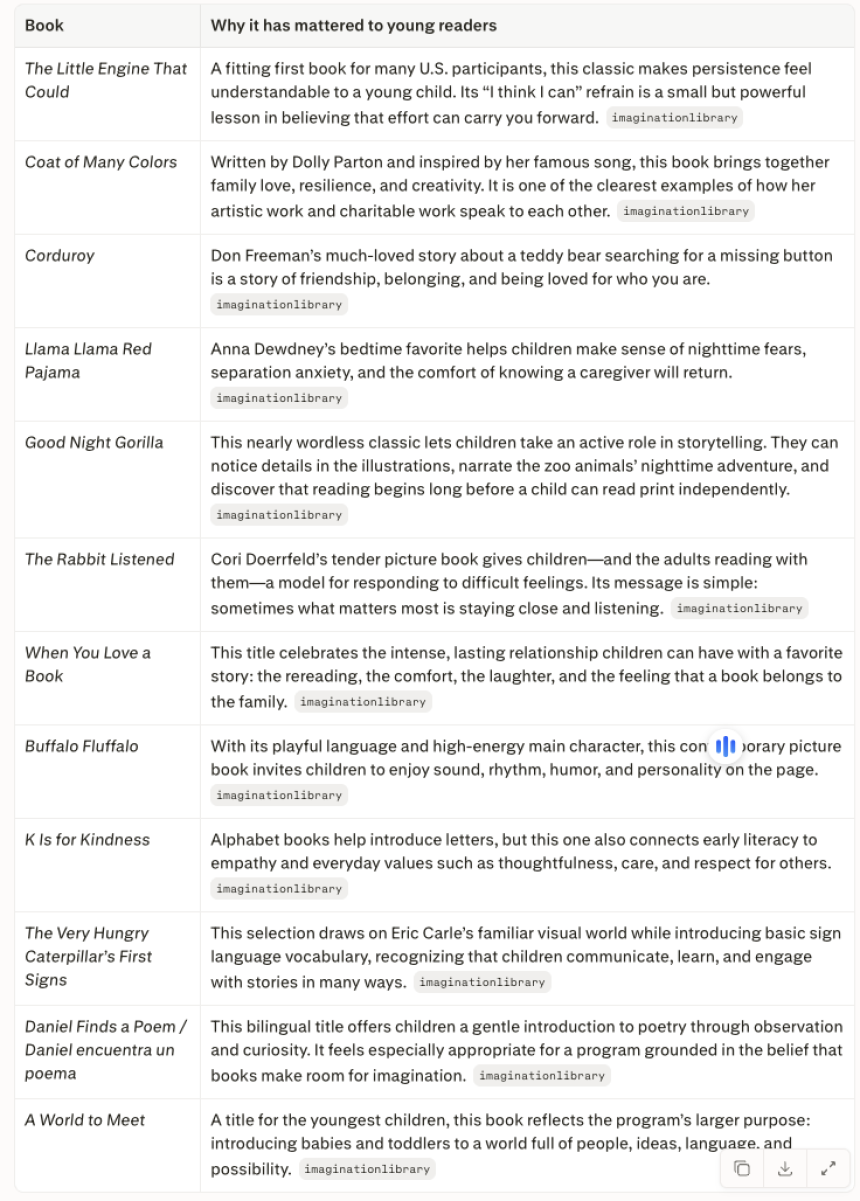
These books do more than fill a shelf. They become part of family routines: the title read every night before bed, the character a toddler points to again and again, the story a caregiver knows by heart because they have read it so many times.
For some children, an Imagination Library book may be the first book they can call their own.
Why Literary Charities Matter
Literary charities are sometimes treated as a pleasant extra—important, but somehow less essential than other forms of support. Yet books are not luxuries in a child’s life. They can be tools for learning, comfort, connection, curiosity, and self-understanding.
Early access to books helps make reading a familiar part of home life. A child may learn new words by hearing a parent read aloud. They may start recognizing patterns in language, asking questions about characters, pointing to colors and animals, or turning a page before they can speak in full sentences. These small moments add up, especially in the years before a child begins school.
Imagination Library is built around that early window of childhood. It sends books monthly from birth until kindergarten age, helping caregivers create routines around reading and giving children repeated opportunities to develop a relationship with stories.
Literary charities also help address unequal access to books. Not every household has money to buy new picture books regularly. Not every family lives near a bookstore or a library branch with extensive children’s programming. Not every caregiver has a large network of people who give books as gifts. A free book mailed directly to a child does not solve every educational inequality, but it removes one meaningful barrier: the cost of owning books.
The value is emotional as well as educational. Stories can help children understand fear, friendship, grief, love, difference, embarrassment, family, and wonder. A child reading The Rabbit Listened may find language for sadness. A child reading Coat of Many Colors may see that limited resources do not prevent a family from making something beautiful. A child receiving a bilingual book may see their home language honored on the page.
That is why literary charities matter. They do not simply distribute paper and ink. They distribute possibility.
A Central Part of Dolly’s Legacy
Dolly Parton will always be remembered for her songs, her glamour, her humor, her business instincts, and the extraordinary generosity that shaped her public image. But Imagination Library is more than a side project attached to a famous name. It is one of the clearest expressions of what she believed success should make possible.
Parton often spoke about the importance of planting dreams in children through books. Imagination Library reflects that belief in practical form: a book is mailed, a child receives it, a caregiver reads it aloud, and another small opening is created in a young person’s world.
The program began in Parton’s home community in East Tennessee and was inspired, in part, by her father’s inability to read and write. Over time, it became a model for how a creator can use enormous cultural influence to build something concrete and lasting.
Her death has brought renewed attention to the literacy work she championed. Her family asked those wishing to honor her memory to consider giving to Imagination Library rather than sending flowers, turning public grief into ongoing support for children and families. Communities have also shown increased interest in local efforts connected to the program, including fundraising mechanisms that help pay for children’s book enrollment and delivery.
That response is a fitting tribute. It recognizes that Dolly’s legacy was never only about looking backward at what she achieved. It is about carrying forward the values she acted on: generosity, imagination, compassion, and the conviction that children deserve every possible chance to dream.
If You Miss Dolly, Share a Book
If Dolly Parton’s death has made you want to do something tangible, support childhood literacy in a way that works for your life. A financial donation is valuable, but it is not the only way to take part.
You might donate to Imagination Library or to a local or regional program partner, where contributions can help cover the cost of enrolling children and mailing books to homes. Families can use the organization’s availability tool to see whether a participating program serves their community.
But you can also give the books you already have. Look through your shelves for gently used children’s books that are ready for a second life, then donate them to a neighborhood school, classroom, public library, family shelter, community center, literacy nonprofit, daycare, pediatric waiting room, or Little Free Library. Before donating, check the organization’s guidelines, some groups accept used books, while others need new copies or have particular age and condition requirements.
There is something especially meaningful about sharing a childhood favorite with the next generation. Maybe it is a well-loved copy of Corduroy, The Snowy Day, Where the Wild Things Are, Madeline, The Giving Tree, Frog and Toad, The Velveteen Rabbit, or the picture book you asked a parent, grandparent, teacher, or librarian to read one more time before bed. Passing that story on says: this book helped make my childhood larger, and now I hope it can do something similar for someone else.
You can honor Dolly’s literacy legacy by:
- Donating money to Imagination Library or a local childhood-literacy organization.
- Giving gently used children’s books to a school, classroom, shelter, library, childcare center, or neighborhood book-sharing box.
- Buying a new children’s book from an independent bookstore and asking that it be donated to a classroom or community-reading initiative.
- Starting a small book drive among friends, colleagues, classmates, or followers.
- Creating a “favorite books from childhood” collection for a young person in your life.
- Reading aloud to a child, whether that means a niece, nephew, grandchild, student, family friend, or child at a volunteer program.
- Sharing local Imagination Library enrollment information with parents and caregivers who may be eligible.
- Supporting a public library’s children’s services, summer-reading program, or early-literacy events.
The amount of money involved does not determine the value of the gesture. A recurring gift may help a regional program plan ahead, but a donated picture book can also become a child’s most-requested bedtime story. A box of books shared with a classroom can give a teacher new material for years. A single favorite passed from one generation to another can make a young reader feel as though a whole world has opened.
Supporting the causes a creator leaves behind is one of the most meaningful ways to honor them. It transforms admiration into action. It ensures that their influence reaches beyond the songs, performances, films, books, or public moments for which they became known.
Dolly Parton gave people music they will keep singing for generations. Through Imagination Library, she also helped give children books they will read, reread, carry to bed, share with siblings, and remember long after they grow up.
That may be one of the loveliest forms a legacy can take: not simply being remembered, but continuing to help someone else imagine what is possible.
About the Author
Nikki Lopez is a seasoned professional with over a decade of experience in the startup world, specializing in leveraging creative content and community building to empower content creators. Known for a strategic approach and a deep understanding of audience needs, Nikki has a proven track record of leading the development of engaging content strategies and guiding the growth of thriving communities. Her leadership focuses on fostering meaningful interactions and impactful journeys for both creators and their audiences.