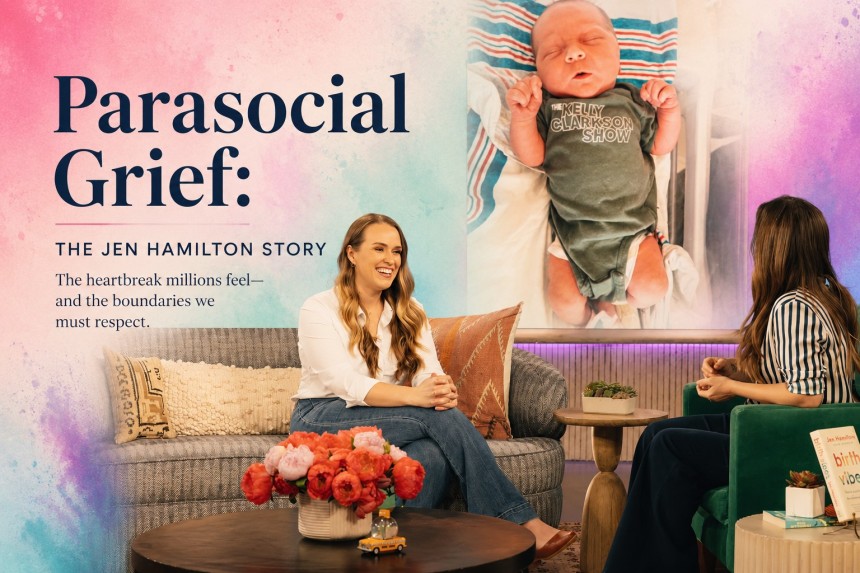

Parasocial Grief: Jen Hamilton and the Relationship We Need to Rethink
What happened to Jen Hamilton? As fans react to her emotional viral post, the story highlights the dangers of parasocial relationships and the importance of respecting creators’ boundaries during real-life heartbreak.
Last night, millions of people watched a woman have her heart broken.
Not a fictional character.
Not a celebrity caught in a tabloid scandal.
A real person.
Popular creator Jen Hamilton posted an emotional video describing the overwhelming pain of what appears to be the end of her marriage. Through tears, she spoke about wishing she could skip ahead to the healed version of herself, the version that no longer wakes up with a shattered heart.
It’s a feeling almost anyone who has experienced heartbreak can understand.
In the caption, Jen wrote:
“He broke my heart but I still love him with all the pieces.”
Then, when a commenter referenced divorce, she replied:
“I’ve just never been enough for him.”
The post remained online for several hours before being removed.
In that time, thousands of comments poured in. Sympathy quickly transformed into outrage. Followers rallied around Jen and directed intense anger toward her husband, Brian Hamilton.
And that’s where this story stops being about divorce.
It becomes a conversation about parasocial relationships.
Why So Many People Feel Like They Know Jen
Jen Hamilton has built her platform by being authentic.
For years, followers have watched her work as a labor and delivery nurse. They’ve laughed at her stories, learned from her experiences, celebrated milestones, and followed along with pieces of her family life.
When creators consistently show up in our feeds, our brains begin to categorize them similarly to people we know in real life.
Psychologists call this a parasocial relationship.
A parasocial relationship is a one-sided emotional connection where an audience member feels close to a public figure who does not personally know them.
And parasocial relationships aren’t inherently bad.
In fact, they’re incredibly normal.
Readers feel them toward authors.
Fans feel them toward actors.
Listeners feel them toward podcast hosts.
Followers feel them toward creators.
The problem begins when emotional investment starts to blur into perceived ownership.
The Internet Wants a Villain
Heartbreak is uncomfortable.
Humans naturally search for explanations when something painful happens.
So when a creator shares their grief, audiences often rush to fill in the blanks.
Who caused this?
Who’s responsible?
Who’s the villain?
The reality is that we know almost nothing about what happened inside Jen Hamilton’s marriage.
We don’t know what conversations occurred behind closed doors.
We don’t know what struggles existed.
We don’t know what either person has experienced.
All we know is that a woman publicly expressed profound pain.
That’s it.
Everything else is speculation.
Yet within hours, social media had already begun constructing narratives and assigning blame.
Because the internet rarely tolerates uncertainty.
The Most Important Part of Jen’s Post
Ironically, the most important thing Jen said wasn’t about heartbreak at all.
It was her request to her audience.
“Please don’t try to reach out to anybody on my behalf. That would make everything much worse for me. Please just let me grieve.”
It was a remarkably clear boundary.
And it’s one that many people claiming to support her may struggle to follow.
Because parasocial relationships can trick us into believing involvement equals support.
It doesn’t.
Sometimes support looks like doing absolutely nothing.
No messages.
No investigations.
No tagging family members.
No hunting for answers.
No attempts to “defend” someone who never asked for defending.
Just allowing a grieving person the dignity of privacy.
We Love Creators. But We Don’t Own Them.
One of the strangest aspects of influencer culture is that audiences often feel entitled to information.
When creators share parts of their lives, viewers can begin to believe they’re owed the rest.
But that’s not how relationships work.
Jen does not owe her followers an explanation.
She does not owe anyone a timeline.
She does not owe anyone evidence.
She does not owe anyone updates.
And neither does Brian.
Creators are allowed to be human first.
Even when they have millions of followers.
Especially when they have millions of followers.
The presence of an audience doesn’t eliminate a person’s right to experience grief privately.
The Cost of Forgetting the Human Behind the Screen
Social media has created unprecedented access to people’s lives.
We know what creators eat for breakfast.
We know their children’s names.
We know where they vacation.
We know when they’re struggling.
But familiarity is not friendship.
The danger of parasocial relationships isn’t that audiences care.
It’s that caring can sometimes become consumption.
A creator’s heartbreak becomes content.
Their grief becomes discourse.
Their marriage becomes a mystery to solve.
And somewhere in that process, we stop remembering there are real people living through the pain we’re discussing.
Not characters.
Not storylines.
People.
The Best Way to Support Jen Hamilton Right Now
If you genuinely care about Jen Hamilton, the answer is surprisingly simple.
Respect her wishes.
She explicitly asked people not to contact anyone on her behalf.
Listen to that.
Allow her the space to grieve.
Allow her family the space to process.
Allow the people directly involved to navigate one of the hardest experiences of their lives without millions of strangers trying to participate.
Because real support isn’t always loud.
Sometimes the kindest thing an audience can do is step back.
Parasocial relationships can make us feel deeply connected to creators we admire.
But moments like this remind us of an important truth:
We may love Jen Hamilton.
We may root for her.
We may hurt alongside her.
But we do not actually know her.
And respecting that boundary might be the most compassionate thing the internet can do right now.
About the Author
Ashley is a wife, mother, and avid reader who relies on audiobooks and a healthy dose of escapism to survive the chaos of everyday life. Her passion for storytelling inspired her to return to school, and she is currently completing her bachelor’s degree in Creative Writing at Southern New Hampshire University. She believes that motherhood doesn’t mean putting your dreams on hold, and her story is still being written.