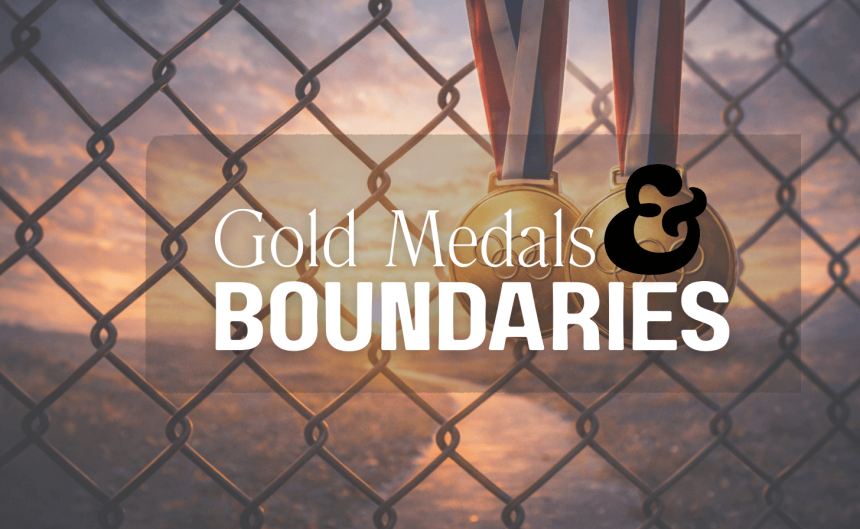

Gold Medals and Boundaries
What Alysa Liu and Simone Biles Taught Us About Choosing Mental Health First
Every Olympics gives us highlight reels.
Perfect landings. Impossible comebacks. Slow-motion tears. Flags wrapped around shoulders.
But sometimes, the most powerful moment isn’t a medal ceremony.
Sometimes, it’s an athlete stepping back.
This year, two names keep rising in conversations about courage, not just for what they did in competition, but for what they chose outside of it: Alysa Liu and Simone Biles.
And what they’re teaching us might matter far beyond the podium.
Simone Biles: Redefining Strength
When Simone Biles withdrew from multiple events at the Tokyo Olympics in 2021, the internet exploded.
Commentary ranged from support to outrage. Words like “quitting” trended alongside “bravery.”
But what Biles described wasn’t fear. It was the “twisties”, a terrifying mental block where gymnasts lose spatial awareness midair. In a sport where inches determine safety, that isn’t a mindset issue. It’s a life-threatening one.
She made a choice most elite athletes are never encouraged to make:
She chose not to perform.
In doing so, she cracked open a conversation that sports culture had long avoided: that mental health is health. That the brain is part of the body. That pushing through is not always heroic.
And here’s the thing: she came back.
Not because she had to prove anything. But because she gave herself the space to return safely and on her terms.
Strength, it turns out, can look like stepping aside.
Alysa Liu: Walking Away at the Peak
Then there’s Alysa Liu.
At 16, she was landing triple Axels. At 17, she was an Olympian. She was widely considered the future of U.S. women’s figure skating.
And then, at just 16 years old, after competing internationally and following her Olympic season, she retired.
No scandal. No injury forcing her out.
Just this: she wasn’t enjoying it anymore.
In interviews, Liu spoke with a clarity that feels almost radical in elite sports. She wanted a normal teenage life. She wanted freedom. She wanted to feel like herself outside of skating.
So she walked away.
Not in disgrace. Not in defeat.
In self-awareness.
In a culture that glorifies burnout and treats “more” as the only acceptable answer, Liu’s decision felt almost rebellious.
She didn’t wait until she broke.
She left while she was whole.
What We’ve Been Taught About Winning
For decades, the Olympic narrative has been built on sacrifice.
You miss birthdays. You miss proms. You train through pain. You ignore doubt. You push until your body or mind gives out, and then you push again.
We celebrate grit. We romanticize exhaustion.
And to be clear: discipline and dedication are beautiful things. The world doesn’t get Simone Biles-level brilliance without them.
But what Biles and Liu show us is that sacrifice without limits isn’t strength. It’s depletion.
There’s a difference between commitment and self-erasure.
The Cultural Shift We’re Watching in Real Time
It’s not an accident that these conversations are happening now.
Athletes are younger. Media cycles are louder. Social media turns teenagers into global brands overnight. The pressure isn’t just about performance anymore; it’s about perception.
What feels different about this Olympic era is that athletes are no longer whispering about mental health. They’re saying it into microphones.
They’re naming anxiety. They’re naming burnout. They’re naming fear.
And instead of those admissions ending their careers, they’re reshaping them.
That matters.
Because the message trickles down.
To college athletes.
To high school competitors.
To creators.
To corporate workers.
To anyone who has ever felt trapped inside a version of success that no longer feels sustainable.
You Are Allowed to Step Back
The biggest myth in high-performance culture is this:
If you stop, you’ll disappear.
Simone Biles stopped and became more respected than ever.
Alysa Liu stopped and became a symbol of autonomy.
Neither story is about quitting.
They’re about choice.
They’re about redefining success as something that includes well-being.
They’re about understanding that longevity requires boundaries.
What We Can Learn (Even If We’ll Never Compete at the Olympics)
Most of us will never stand under Olympic lights.
But we all know pressure.
We know the voice that says, “Don’t slow down.”
We know the fear that stepping back means falling behind.
We know how hard it is to admit we’re overwhelmed.
What Biles and Liu model isn’t perfection.
It’s permission.
Permission to pause.
Permission to pivot.
Permission to protect your peace before protecting your productivity.
And maybe that’s the most radical gold medal of all.
About the Author
Ashley is a busy wife and mother who can often be found listening to an audiobook while driving the mom taxi in a desperate attempt to cling to her sanity through the joy of escapism. Her love of reading inspired her to return to school, and she is currently finishing her bachelor’s degree in creative writing at Southern New Hampshire University. Being a mother does not mean you have to give up your dreams; her story is still being written.