
Why Is TikTok Bringing Creators to Sundance:
What Does It Mean for Hollywood?
TikTok’s decision to send a handpicked group of creators to the 2026 Sundance Film Festival shows how deeply the app is now woven into Hollywood marketing and into how younger audiences discover culture and news. It also highlights TikTok’s broader transformation into a major news and information source, and raises competitive pressure on rivals like YouTube, Instagram, and Snapchat to build similar creator-driven presences at marquee events.
TikTok at Sundance: Who’s Going and What They’re Doing
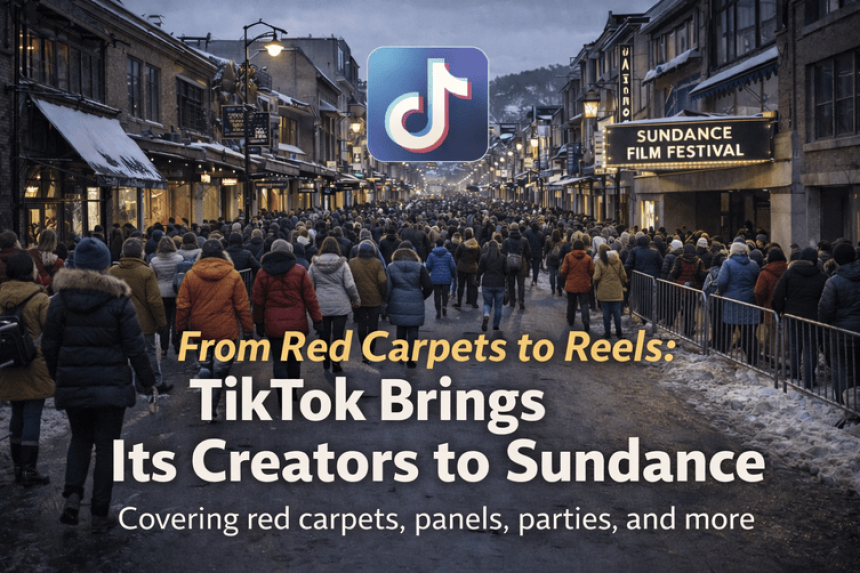
TikTok sent 10 creators to the 2026 Sundance Film Festival to capture red carpets, panels, parties, and behind-the-scenes festival moments in real time. These creators are treated as on-the-ground correspondents, producing short videos that break down celebrity interviews, festival reactions, and industry chatter for audiences who will never set foot in Park City.
One of the featured creators is Seattle-based film and TV commentator Sam Schendel, who has around 121,000 followers and now makes TikToks full time. At Sundance she has already posted videos analyzing actor Chris Pine’s behavior at the premiere of his film “Carousel,” and plans to publish six or seven more videos before leaving the festival.
TikTok’s official footprint at Sundance includes a large panel, a creator-centered event, and a co-hosted happy hour with indie powerhouse A24 that pop artist Charli XCX attended. The activation is more low-key than some long-standing brand installations on Main Street but still draws enthusiastic lines of creators eager to pose in front of TikTok’s illuminated “T” logo and step-and-repeat backdrop.
Why This Move Matters to Hollywood
TikTok now sits at a strange but powerful intersection with Hollywood: studios depend on it to generate buzz, but many still hesitate to treat TikTokers as elite talent. This mirrors the early days of YouTube, when creators were central to fan culture but often dismissed by traditional film and TV insiders.
Studios and brands increasingly hire TikTok creators to interview celebrities and promote projects across social platforms, sometimes paying them thousands of dollars per campaign. These creators bring built-in communities that trust their taste, making them especially valuable for niche or indie films that rely more on word-of-mouth than on massive ad buys.
During a Sundance panel, Focus Features vice chairman Jason Cassidy said the studio uses TikTok to “build authentic fandom” around films and draw audiences back to theaters, especially younger viewers skeptical of traditional marketing. Creator Kit Lazer (moviesaretherapy on TikTok) emphasized that studios work best with creators when they allow authentic voice and creative freedom, praising A24 and Lionsgate as standout partners.
TikTok’s Growth as a News Source
TikTok’s Sundance push lands at a moment when the platform is rapidly becoming a major news and information channel, especially for younger users. Pew Research data show that 1 in 5 U.S. adults now say they regularly get news on TikTok, up from just 3% in 2020, the fastest growth in news use among major social platforms during that period.
Among adults under 30, 43% report regularly getting news on TikTok, compared with single-digit levels in 2020. More than half of TikTok’s adult users (55%) now say they regularly get news on the app, putting it on par with platforms like X (Twitter), Facebook, and Truth Social in the share of users who turn to it for news.
For Gen Z social media users, TikTok has become the top platform for news, edging out YouTube, Facebook, and Instagram as of 2025. Industry tracking also notes that TikTok is among the fastest-growing social networks overall and that news consumption on the app has climbed from about 14% of U.S. adults in 2023 to around 20% in 2025.
Why TikTok’s Sundance Strategy Is Meaningful
Bringing creators to Sundance is less about red carpets and more about narrative control: TikTok is positioning itself as a primary lens through which younger audiences experience major cultural events. Instead of relying solely on critics or entertainment outlets, viewers can watch festival coverage in the language and format of the creators they already follow and trust.
For Hollywood, this means that festival buzz, perceived “must-see” status, and even reputational crises can be shaped in real time by TikTok feeds rather than just by trade publications or mainstream reviews. As more people get both entertainment and news from TikTok, the same creator who posts a funny celebrity interaction might also influence opinions on industry labor disputes, representation issues, or censorship debates.
The move also underscores how creator economies and film ecosystems are converging; Sundance isn’t just a buyers’ market and premiere venue anymore, but also a live content engine for platforms that monetize attention minute by minute. TikTok’s relatively understated but creator-centric presence suggests it sees long-term value in building a repeatable playbook for major festivals rather than just staging a one-off splash.
Are TikTok’s Competitors Doing the Same Thing?
TikTok is not the first or only digital platform to build a presence at Sundance, though it is one of the clearest examples of a short-form video app centering its own creators as the “talent.” In recent years, Sundance has become a hotbed for brand activations and media lounges from companies including Canon, Shutterstock, IMDb, Adobe, Vulture, Chase Sapphire, and others that host panels, photo studios, and creator-friendly experiences.
Video and social platforms such as YouTube and IMDb (owned by Amazon) have run studios and content hubs at Sundance where they film interviews, produce clips, and feature online personalities alongside traditional actors and directors. These efforts mirror TikTok’s strategy of turning festival content into always-on social media programming, though they have historically leaned more on professional hosts and journalists than on native short-form creators.
Instagram, YouTube Shorts, and Snapchat Spotlight have not, as of early 2026, matched TikTok’s specific move of publicly sending a branded cohort of Shorts/Reels/Spotlight creators to Sundance under their own banners, though they frequently highlight creators covering awards shows and film festivals. Instead, much of their event presence is folded into broader studio partnerships, red-carpet streams, or influencer campaigns rather than a clearly labeled platform-led “creator delegation” like TikTok is showcasing at this year’s festival.
Cited Sources
NBC News :“TikTok puts its creators in the Hollywood spotlight at Sundance Fest.” (2026)
MediaPost: “Pew: TikTok Most Popular Social News Source For Gen Z.” (2025).
Hootsuite Blog: “60+ social media statistics marketers need to know in 2026.” (2026).
About the Author
Nikki Lopez is a seasoned professional with over a decade of experience in the startup world, specializing in leveraging creative content and community building to empower content creators. Known for a strategic approach and a deep understanding of audience needs, Nikki has a proven track record of leading the development of engaging content strategies and guiding the growth of thriving communities. Her leadership focuses on fostering meaningful interactions and impactful journeys for both creators and their audiences.