
Can You Write With a Day Job?
If you are trying to write while working a day job, you are in very good company. For most of literary history, that has been the rule rather than the exception. Writers have always had to make rent somehow, and many of them built the worlds we now study and love while juggling teaching, publishing, office work, service jobs, or far stranger paths along the way.
That is not a sign that you are behind. It is a sign that writing has always been something people build around the edges of real life. And in a way, that makes the work richer. Day jobs give writers material, discipline, conflict, and a front row seat to human behavior. Sometimes the job is just a paycheck. Sometimes it becomes the thing that later shapes the books.
Writers who worked first
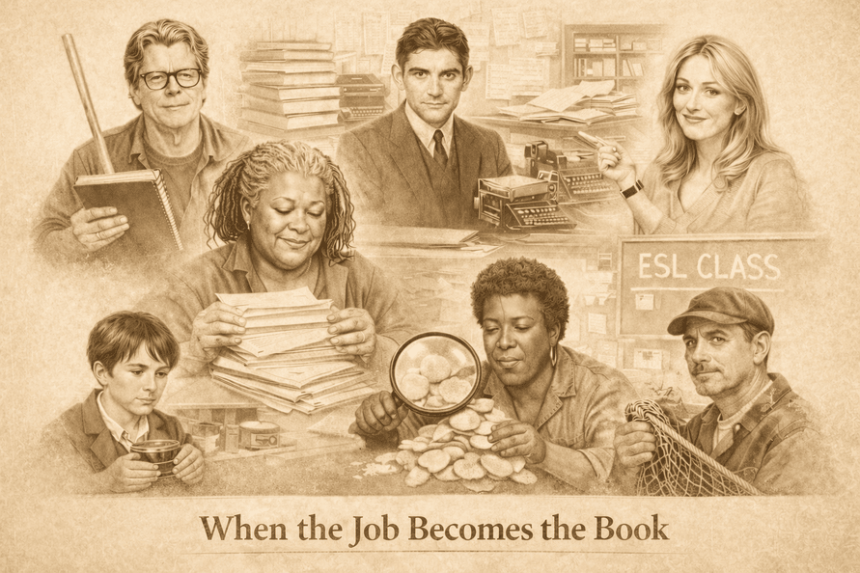
Some of the most famous authors in the world started out in completely different careers. Toni Morrison worked in publishing before becoming one of the most celebrated novelists of the twentieth century, which gave her a deep understanding of books from the inside before she became a literary force herself. Franz Kafka worked in insurance and spent his days in bureaucracy, a job whose atmosphere of paperwork and absurdity seems to haunt his fiction even now.
Stephen King worked as a teacher and school janitor while trying to get published, and he has said that ordinary jobs often gave him the textures and frustrations that made his stories feel real. Octavia Butler held a string of temporary jobs, including dishwasher, telemarketer, and potato chip inspector, and those shifts helped support the early years of her writing life. Charles Dickens worked in a shoe polish factory as a child, and that early labor shaped the way he later wrote about class, work, and endurance.
Other writers took equally unusual routes. Don DeLillo worked in advertising before becoming a novelist, and that experience with language, persuasion, and consumer culture later fed into his fiction. J.K. Rowling taught English as a second language before returning to the UK and eventually writing Harry Potter. John Steinbeck worked at a fish hatchery and later in warehouse jobs before finding his way into literature. These are not side notes. They are reminders that a writing life can begin anywhere.

UC Davis Eriksson Education Center at the Historic Fish Hatchery (where John Steinbeck worked)
When the job becomes the book
Sometimes a writer’s career does not just support the writing. It becomes the writing.
Many novels are directly inspired by the author’s own work life, from mental health work to babysitting to editorial careers. Holly Bourne’s experience in teen mental health work shaped the emotional realism in her fiction. Kiley Reid drew from her experience as a babysitter when writing Such a Fun Age, which explores race, class, and power through an ordinary-looking job that turns complicated fast. Those stories feel lived in because they are.
This happens across genres. Charles Bukowski’s years at the post office fed into his voice and sensibility, while Raymond Chandler’s strange patchwork of jobs before publishing helped create the hard-edged realism of his crime writing. Franz Kafka’s job in insurance and bureaucracy likely sharpened the surreal sense of systems and pressure that define his work. In other words, your day job is not an obstacle to writing. It can be one of your best sources.
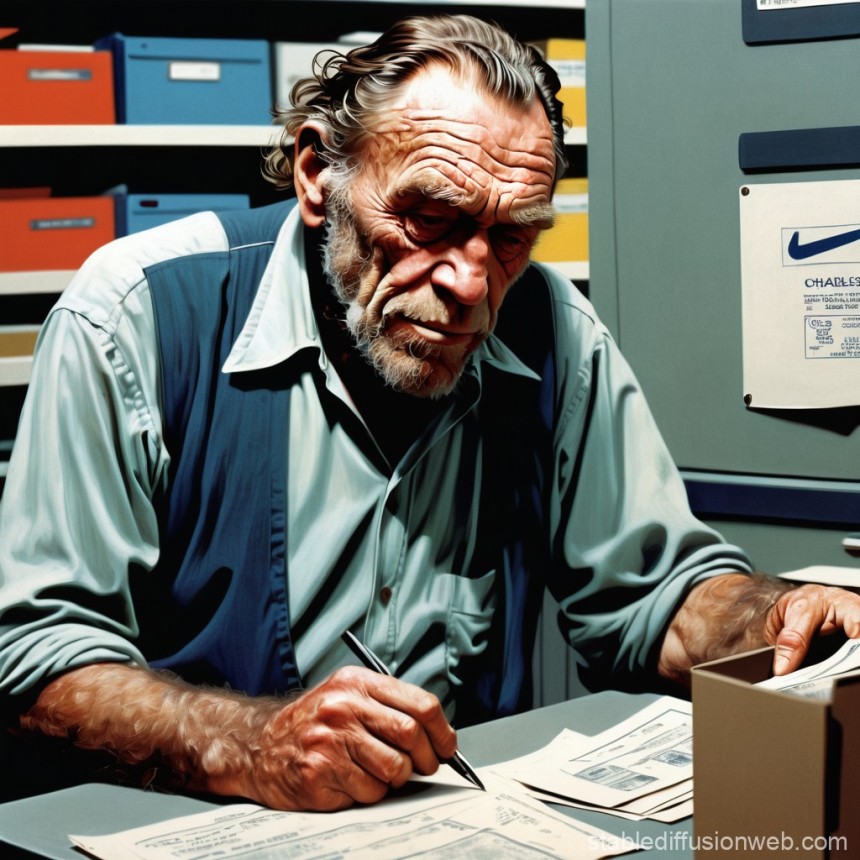
Charles Bukowski working at the Post Office
Why this matters for new writers
If you want to write, the most important thing to know is this: it is never too late. You do not need to wait for the perfect schedule, the ideal job, or a magically free season of life. Many writers begin by writing before work, after work, on lunch breaks, or in the gaps between everything else.
The truth is that most writing lives are built in pieces. That can be frustrating, but it can also be freeing. You do not need to become a full time writer before you are a real writer. You are a writer if you are writing.
How to write with a day job
Balancing a job and writing is hard, but it is not impossible. A few practical habits help a lot:
- Write in small, regular blocks. Even 20 or 30 minutes a day adds up.
- Protect one or two writing windows a week if you can, even if they are short.
- Keep notes on your phone so you can capture ideas during the workday.
- Lower the pressure on each session. Not every writing block has to produce perfect pages.
- Make a habit of stopping mid thought so it is easier to return later.
- Use recurring routines, like writing before breakfast or after your commute, so the work becomes automatic.
The goal is consistency, not perfection. A writer with a day job usually wins by showing up again and again, not by waiting for a big burst of free time.
How your job can feed your writing
Your day job can give you more than a paycheck. It can give you voice, detail, and the kind of lived in observations that make fiction feel real. Sometimes the best story material is not the dramatic stuff, but the tiny routines and strange little habits people fall into when they think nobody is really watching.
Instead of asking broad, formal questions, try this:
- What does this place reveal about people under pressure?
- What kinds of conversations or conflicts keep repeating here?
- What little details would an outsider never notice?
Those are the kinds of things that can quietly become story material.
For example, if you work in retail, you might notice how differently people behave when they are rushed, embarrassed, or trying to impress someone. That could become a character study, or even the tension in a scene where someone is forced to make a decision in public. If you work in an office, the repetitive meetings, weird power dynamics, and small acts of competition can easily turn into a sharp workplace novel or a tense subplot. If you work in a school, a hospital, a restaurant, or anywhere people are constantly under stress, you already have built in material for dialogue, conflict, and character behavior.
That is part of the quiet gift of having a day job while you write. You are constantly collecting human details whether you mean to or not.
The real lesson
The story of authors and day jobs is not a story about failure. It is a story about persistence, adaptation, and the weird fact that creative lives are often built in between shifts, classes, commutes, and paychecks.
Some writers use their day jobs to survive. Some use them to learn. Some use them as fuel.
So if you are writing before work, after work, or during a lunch break in a break room somewhere, that counts. It counts a lot. You do not need permission to begin, and you do not need to be fully free to be serious about your writing.
Would you like me to make this one a little more personal and bloggy, or keep it in this polished magazine style?
Writers With Day Jobs: Earning a Living Outside of Literature
55 Famous Writers: What They Did Before They Wrote
8 Novels Inspired by the Author’s Day Job
10 Famous Authors Who Had Surprising Day Jobs Before Writing
The Surprising Day Jobs of 20 Famous Writers
10 Famous Authors With Surprising Day Jobs
Authors with other careers discussion
Day Jobs of Famous Authors discussion
About the Author
Nikki Lopez is a seasoned professional with over a decade of experience in the startup world, specializing in leveraging creative content and community building to empower content creators. Known for a strategic approach and a deep understanding of audience needs, Nikki has a proven track record of leading the development of engaging content strategies and guiding the growth of thriving communities. Her leadership focuses on fostering meaningful interactions and impactful journeys for both creators and their audiences.